Assisted dying and personal autonomy
What Are You Going ThroughAssisted dying and personal autonomy are framed through a terminally ill woman’s attempt to shape her own death, not as an abstract claim to independence but as a decision entangled with pain, fear, family history, and the need for companionship. She believes she knows what to do and does not ask her friend to help cause her death. What she asks for is someone who will stay close enough that she need not face the unknown entirely alone. The distinction makes the book’s central tension plain: she claims authority over her own ending, yet carrying out that choice asks another person to witness it and accept its emotional cost.
The Desired Death and the Fear Behind It
The woman’s decision begins in part with a refusal of the death she fears: one marked by anguish, loss of control, and terror. She worries about becoming overwhelmed by rage or self-pity, or so frightened that she can no longer keep her composure. Her imagined alternative is a death without severe suffering, approached with poise and dignity, and without the humiliations she associates with bodily helplessness. The ideal is not presented as a guarantee. She recognizes that such a death is uncommon, and her question is why a degree of control and dignity should seem too much to ask.
Her language about illness and prognosis reinforces that this is a considered choice rather than a sudden reaction. She says that doctors eventually speak plainly about incurability and a terminal prognosis, and that she has researched what may happen if she allows the disease to follow its course. She regards palliative care as limited and does not want to linger in hospice while becoming increasingly dependent on others. In her reasoning, choosing the timing is a form of resistance: she sees the choice as a way to act before cancer dictates every remaining condition of her life. The book presents this reasoning as hers, without turning it into a general medical rule or suggesting that every person facing terminal illness would choose the same course.
Autonomy That Needs a Witness
The woman draws a clear boundary around the help she wants. She tells the narrator that she already knows what to do and that the practical action is not complicated; she is not asking the narrator to help her die. Instead, she needs someone present. She expects to want solitude, consistent with a longstanding preference for being alone, but does not want to be wholly isolated during an unfamiliar and uncertain experience. The person she seeks is to be in the next room, available if something goes wrong. Her request therefore joins privacy to presence: she wants to retain control of her own act while knowing that another person has not abandoned her to it.
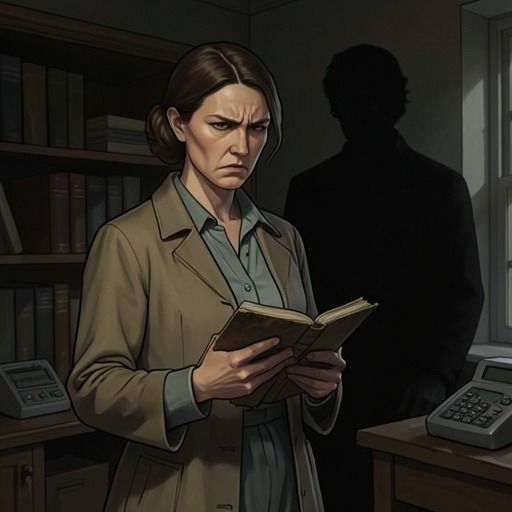
That division of roles does not remove the burden on the person who agrees. The narrator eventually says yes and promises to do what is needed; the friend’s relief is so great that she begins to sob. The promise gives the friend reassurance, but it also places the narrator inside a decision she cannot make on the friend’s behalf and cannot treat as emotionally simple. Since agreeing, the narrator repeatedly doubts that she can go through with it and thinks she has made a serious mistake. She also feels unable to withdraw. When she tells her friend about those doubts, the friend replies that she intends to proceed anyway. Her resolve makes clear that the narrator’s presence matters, but is not the source of the decision.
Family, Friendship, and the Limits of Consent
The request is shaped by the woman’s limited circle of possible companions. She identifies her daughter as her closest family member, but rules out asking her. Their relationship has long been troubled, and the woman fears that the daughter might agree from duty, then be left with feelings she could not manage. She also considers the daughter’s position as the main beneficiary of her will an added complication. Her refusal to involve her is thus not simply a statement that they are estranged: it reflects the woman’s concern about placing her daughter in a morally and emotionally fraught position.
The woman’s two closest friends have also refused. They understand why she has made her choice and do not want her to suffer, but say they cannot take part in assisted dying, even indirectly, and would try to stop her. Their refusal distinguishes sympathy from consent to participate. The woman’s appeal to the narrator comes after these refusals, leaving the narrator with a role that neither her family nor her other close friends will accept. The scene shows how a choice can be personally settled and still encounter the limits of other people’s convictions, attachments, and capacity to bear witness.
A Plan in an Uncertain World
The friend does not tell the narrator exactly when she will act. She says that one morning the narrator will know because the bedroom door will be closed. The signal draws on a familiar domestic detail: the friend usually sleeps with the door ajar, a habit formed when she had cats, and a closed room makes her feel confined. A private choice is thus given a simple outward marker, but that marker does not make the waiting easy. One morning, while it is still dark, the narrator sees the closed door and panics, fearing that the moment has come. She goes to the kitchen, struggles to steady herself, and breaks down. The episode reveals the emotional consequences of being asked to wait without knowing the precise time, even while the friend’s need for control is respected.
The later account of events challenges the hope that a chosen death can be kept orderly. The friend describes what was supposed to be a peaceful ending as having turned into a nightmare and a humiliating farce. The evidence does not make that reversal a refutation of her decision; it does, however, set the desired ideal against an outcome she experiences as profoundly unlike it. Autonomy can establish an intention, but it cannot guarantee that events will conform to the person’s imagined manner of dying. The narrator’s part in the experience is consequently not reducible to the promise she made: she must also live through uncertainty and the collapse of the plan’s anticipated composure.
The Cost of Returning to Ordinary Life
While the decision and its aftermath occupy the narrator, ordinary tasks continue to press in. She thinks about groceries and the need to make a list; elsewhere, she remembers how small routines such as cleaning a bathroom, finishing a modest chore, or eating a packed lunch have sometimes helped her get through a day. Such details do not cancel the gravity of the friend’s choice. They show how attention shifts between the crisis and the practical work of continuing to live, without resolving the conflict between them.
At the book’s closing image, the narrator sits with grocery bags containing eggs, bread, salmon, kale, and ice cream that her friend will never eat. She imagines eating far beyond fullness, then cannot readily rise from the park bench; panic and uncertainty return. The food is both ordinary provision and a measure of the friend’s absence: it was bought in a world where the friend might have eaten, but now belongs to the narrator. This ending keeps personal autonomy and relational consequence in the same frame. The friend’s choice is hers, but the decision does not remain hers alone in its effects; the person who accompanied her must continue among the routines, objects, and appetites of a life altered by that choice.